Published 2026-09-15 · by the Triops.me Editorial Team · Back to Articles
Haikouichthys: The First Fish
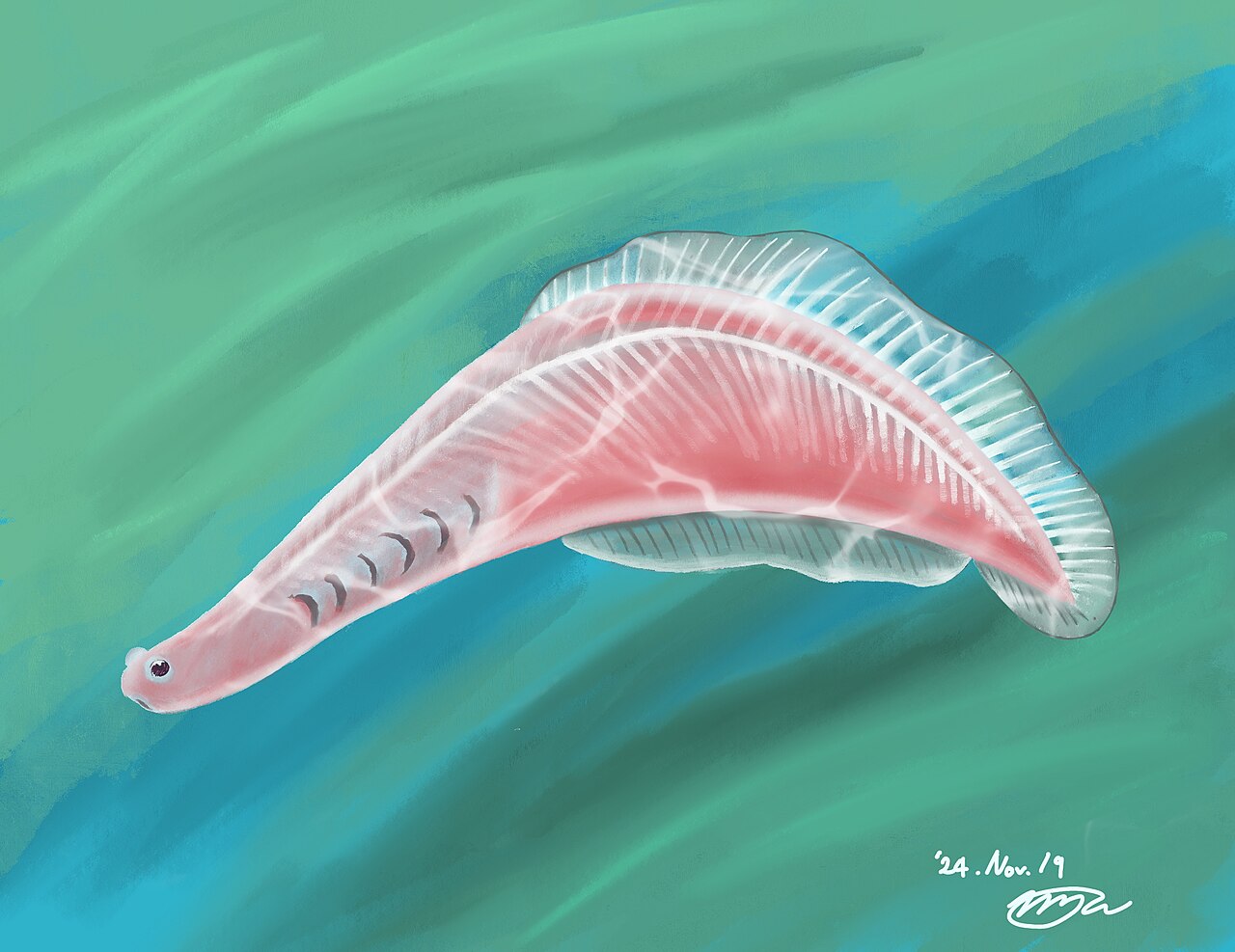
Every animal with a backbone, from the smallest guppy to the blue whale, from the sparrow on your windowsill to you, traces its family tree back to a creature about the size of a paperclip. Its name is Haikouichthys, and it swam in shallow tropical seas roughly 518 million years ago, during the Cambrian period. It had no jaws, no paired fins, no scales and no bones in the usual sense. What it did have was a true skull made of cartilage, a notochord running down its body, and muscle blocks arranged in neat chevrons along its flanks. In other words, it was the first fish, and quite possibly the first animal on Earth that we would confidently call a vertebrate.
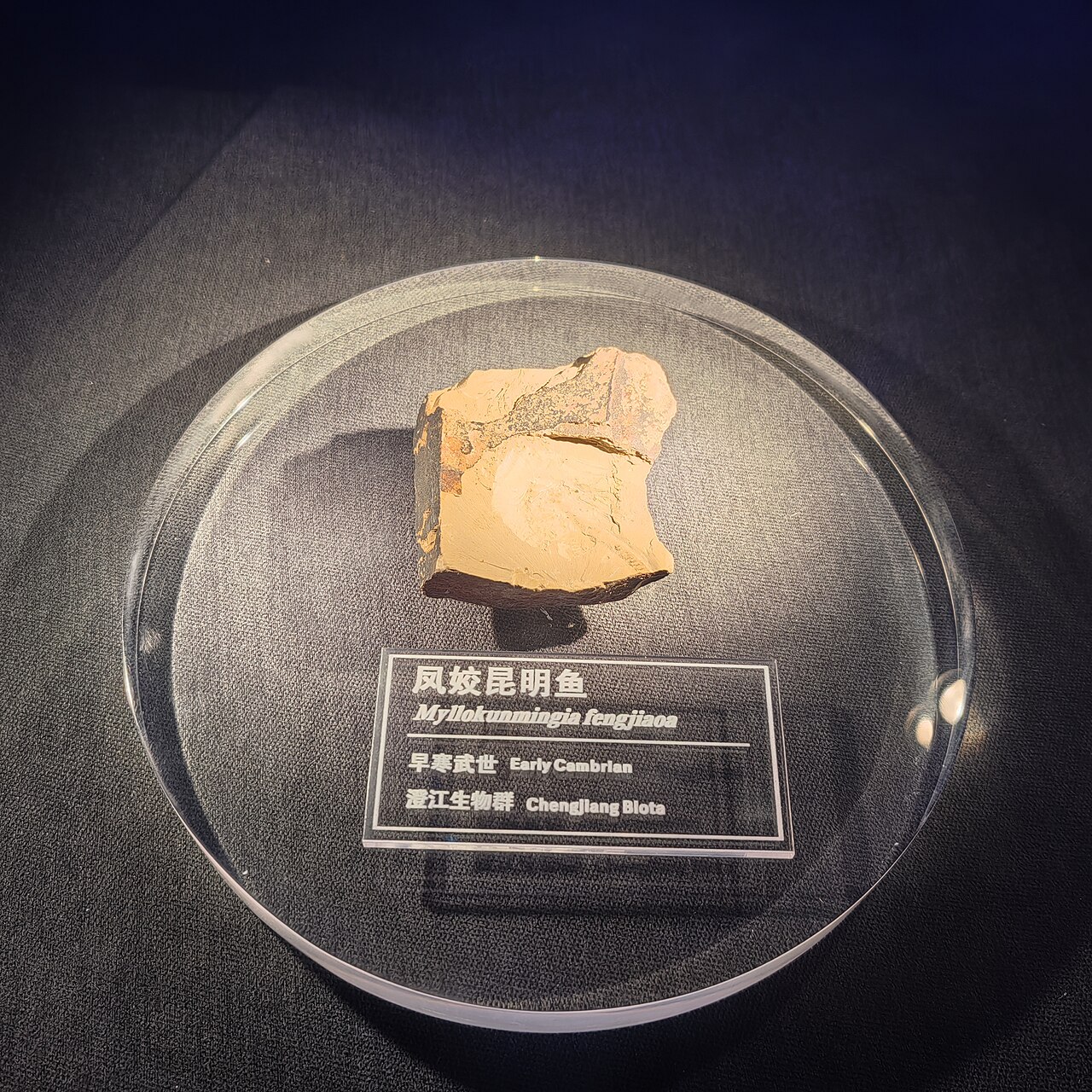
Fossils of this tiny pioneer were unearthed near the town of Haikou in Yunnan Province, southern China, in beds belonging to the famous Chengjiang biota. In 1999, paleontologist Shu Degan and his colleagues, working with Simon Conway Morris, announced the discovery in the journal Nature alongside a second candidate, Myllokunmingia. The find caused a genuine stir. Until then, the earliest undoubted vertebrates came from rocks hundreds of millions of years younger. Suddenly the story of our own lineage was being told from the same astonishing window of time that produced Anomalocaris, Opabinia and the rest of the Cambrian explosion.
Haikouichthys was small, around two and a half centimeters long, but the fossils are remarkably detailed. The Chengjiang muds preserved soft tissue, not just hard parts, so scientists could see its eyes, its gill structures and the repeating zigzag of its muscle segments. The skull was cartilage, the same flexible material that shapes your ears and nose. Its body was streamlined and finished with a fin fold along the back and underside, an early prototype of the fins later fish would perfect. It likely fed by sucking in small particles or tiny organisms, a humble job for an animal that would found the most successful body plan in vertebrate history.
One of the most striking things about Haikouichthys is what it shared with Pikaia, the famous chordate from Canada's Burgess Shale. Pikaia had a notochord and muscle blocks, but whether it was a true vertebrate remains debated. Haikouichthys crossed a clearer line. A definite skull built around a brain, plus eyes and sensory equipment, mark it as something more than a chordate experiment. It is also possible that Myllokunmingia and Haikouichthys are closer to each other than some researchers like, perhaps even variations of the same kind of animal, but both tell the same essential story: the vertebrate body plan had arrived by the early Cambrian.
Life in the Chengjiang sea was anything but safe for a two-centimeter swimmer. The same deposits that preserve Haikouichthys preserve Anomalocaris, the meter-long apex predator that crushed prey with spinning mouth plates, plus a menagerie of trilobites, worm-like lobopodians and strange sponges. Being small, soft and fast was the entire survival strategy. That theme should sound familiar to regular readers of this site. The arthropods ruled these waters, as they would rule temporary ponds and rock pools for hundreds of millions of years afterward, and creatures like Triops still carry that ancient branchiopod playbook today: grow fast, breed early and outlast everything else.
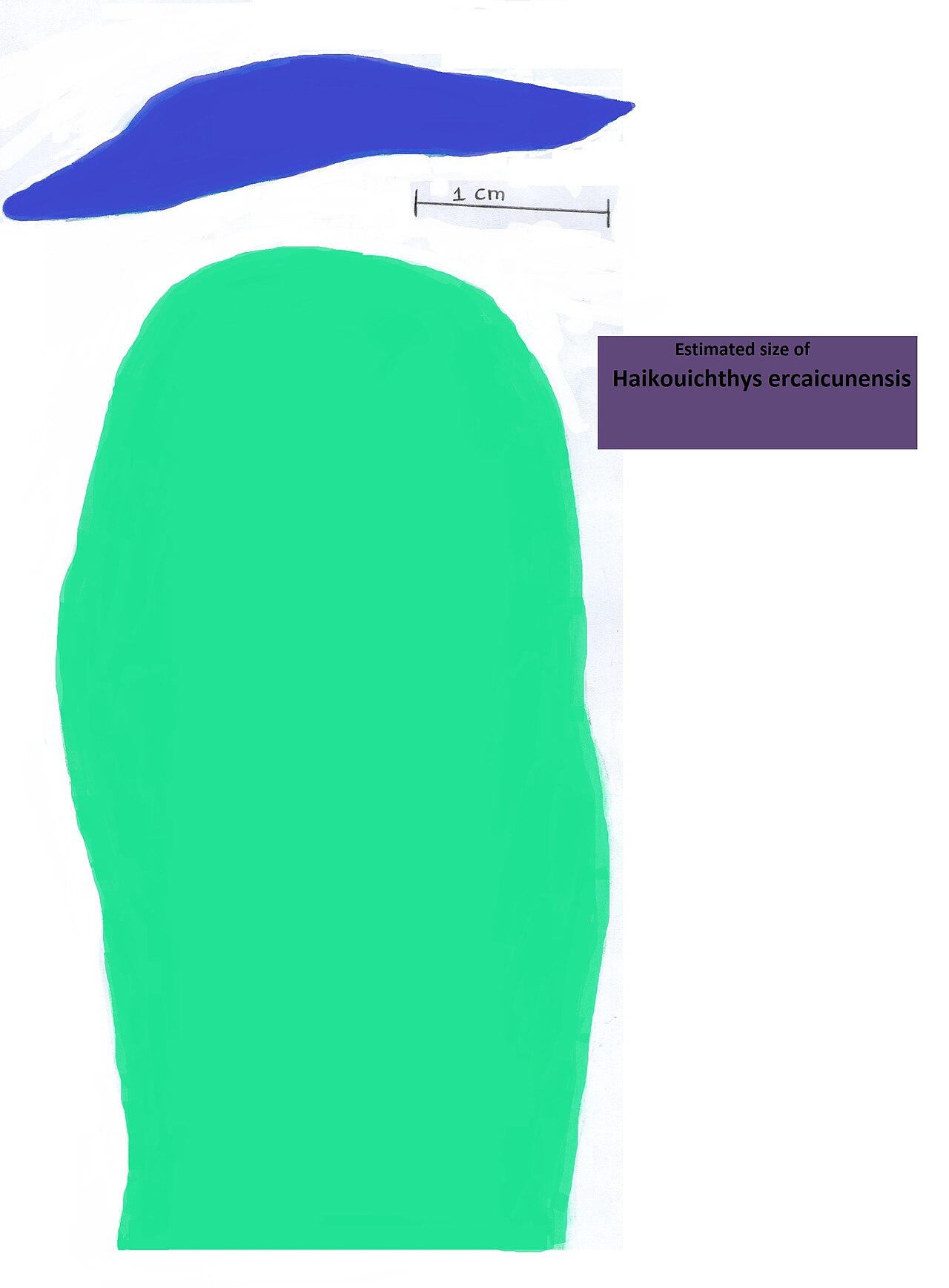
So what happened to the first fish? Haikouichthys itself vanished with the Cambrian seas that bore it, but its lineage diversified. Over the Ordovician and Silurian, jawless fish flourished in armor-plated forms like the ostracoderms. Around 420 million years ago, jaws evolved from the gill arches, and with them came the ancestors of sharks, bony fish and eventually every tetrapod that walked onto land, including the fish that first crawled ashore. The most conservative branch of that old family tree never bothered with jaws at all, and it survives today in the form of lampreys and hagfish, living fossils we cover in their own article. When you look at a lamprey's jawless, eel-like mouth, you are seeing a rough sketch of what Haikouichthys carried into the world half a billion years ago.
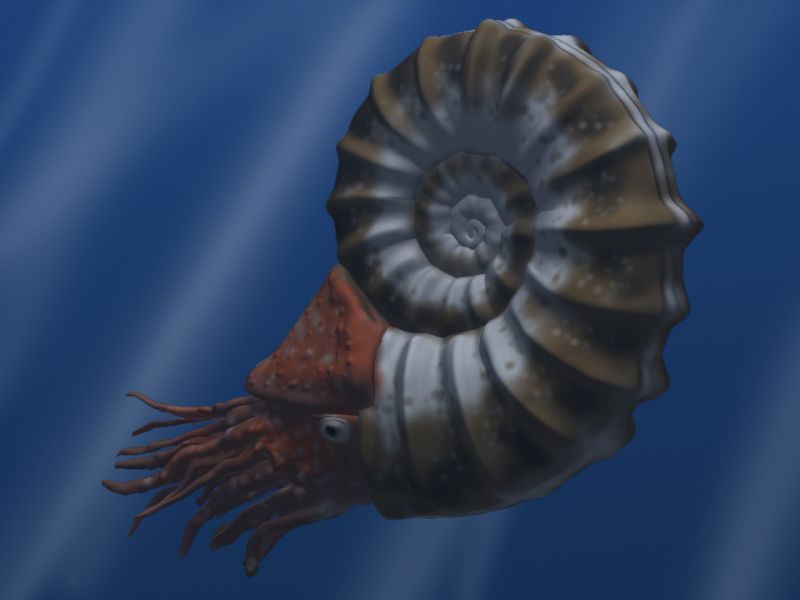
There is something quietly humbling about the whole story. The first vertebrate was not a giant, not a predator, not a marvel of engineering. It was a soft, small, unarmored scrap of life clinging to the seafloor of a world already full of armored giants. Its biggest innovation, a stiff rod supporting its body and a skull protecting its brain, seemed unremarkable at the time. Yet that innovation would outlast the Anomalocarids, the trilobites, the ammonites, the dinosaurs and every other body plan that once seemed unshakable. Five hundred million years of evolution later, every animal reading this sentence is carrying Haikouichthys' invention in its neck.
If you want to meet another survivor from those same Cambrian seas, the trilobites and the baffling Hallucigenia are waiting in our creature gallery, along with the modern relic fish coelacanth that proved an ancient lineage can hide in plain sight. And if you keep triops at home, take a moment to appreciate that you are raising descendants of the arthropod empire that watched the very first fish take its first flick of a tail.